Choose your arrival point around the first night. Svolvær Airport suits the east, Leknes the central islands, Evenes an overland approach, and Bodø plus the Moskenes ferry a western arrival. Compare the journey all the way to the door.
Compare Harstad/Narvik Airport, Evenes with a rental car or a dated public-transport itinerary. Landing at Evenes still leaves a transfer into Lofoten.
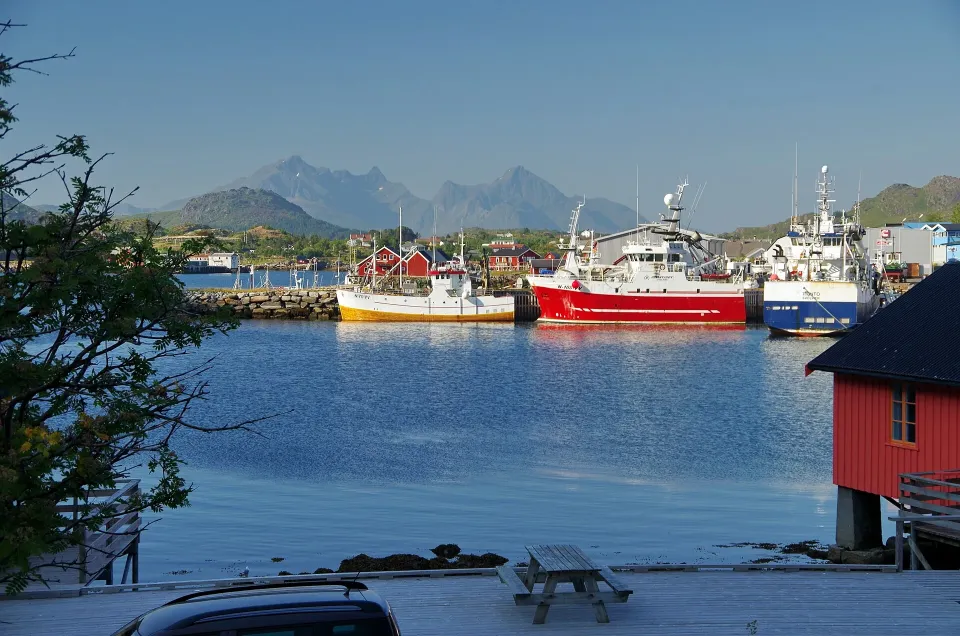
Svolvær and Kabelvåg are eastern bases; Leknes and Ballstad are more central; Reine, Sørvågen and Å are farther west. A cheap flight can add a substantial transfer if it lands at the wrong end for your plans.
Repeat the exercise for the final night. An early departure may justify sleeping closer to the airport or ferry terminal. Do not judge the arrival route without checking what it asks of you on the way home.
Write down two complete alternatives: leave home, change transport, collect luggage, reach the accommodation. Include any hotel night between connections, not just the flight fare. Our guide to where to stay helps you choose a base first.
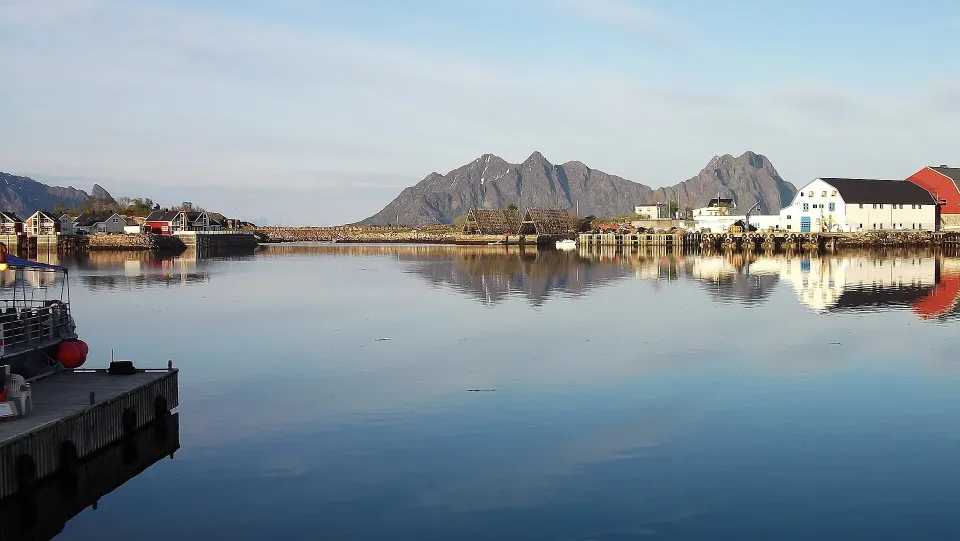
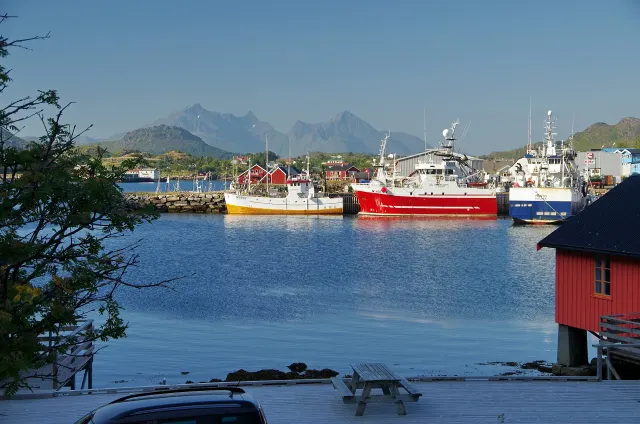
Ballstad harbour
For a shorter ground transfer
Fly into Lofoten: Svolvær and Leknes
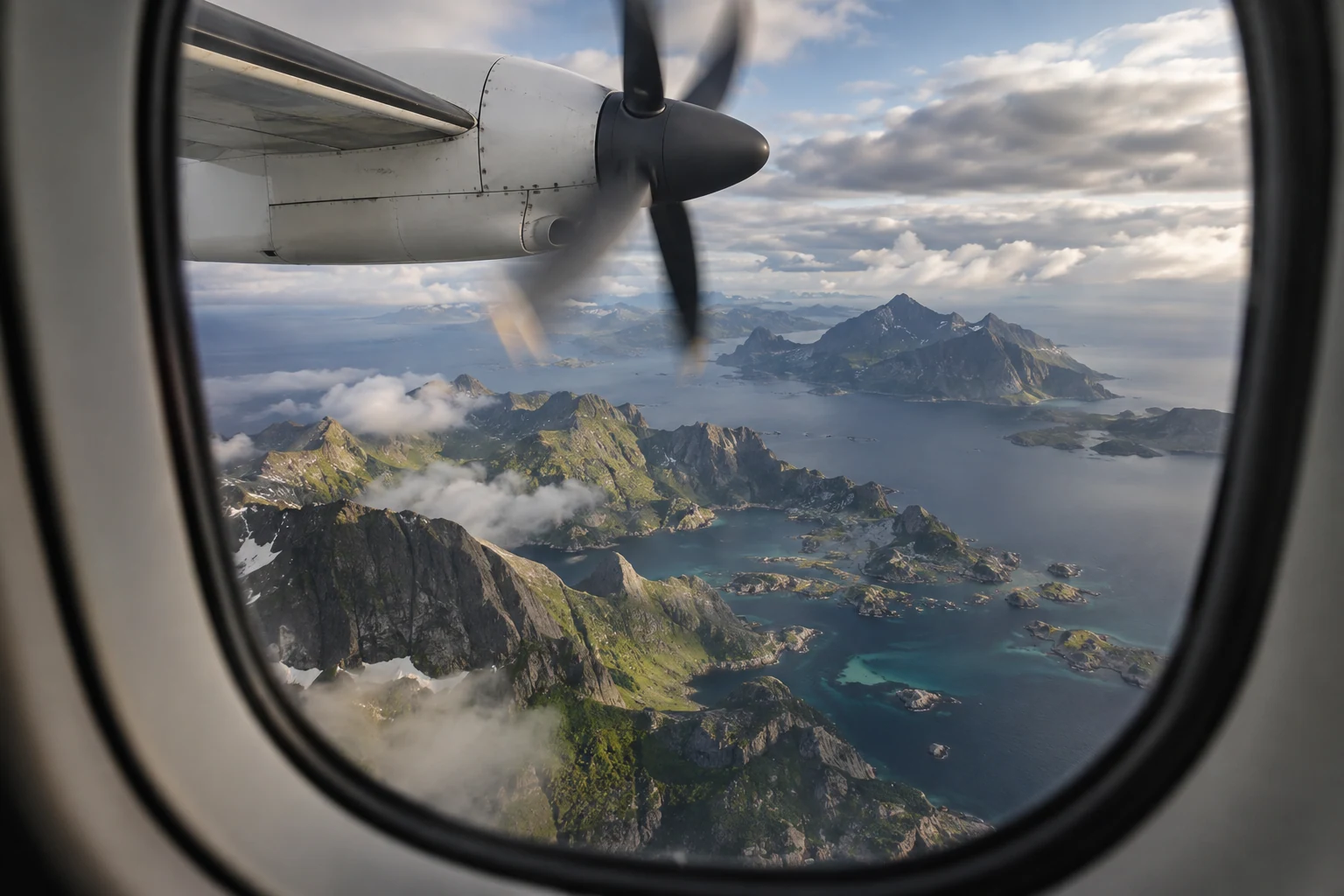
Svolvær Airport, Helle (SVJ) and Leknes Airport (LKN) are both within Lofoten. Svolvær is useful for the eastern town and nearby villages; Leknes is a practical arrival for central Lofoten. Check the flight routing for your own departure city and travel date.
A local arrival can shorten the ground transfer, but the flight itinerary may include a connection. Compare total travel time, luggage rules and the consequences of a missed connection, especially if you are considering separate bookings.
Arrange the last leg before arrival. Check the taxi arrangement, available rental car or public-transport itinerary rather than assuming a vehicle will be waiting at any hour. For a late arrival, also confirm accommodation check-in.
Evenes: arrive outside Lofoten and continue by road
Harstad/Narvik Airport, Evenes (EVE) is a common gateway to the region, but it is not on the Lofoten Islands. The onward road journey is part of the trip. It is worth comparing particularly when the first night is in the east and you want a car throughout.
For a rental car, match opening hours and delayed-flight procedures to your arrival. For public transport, search the precise date and destination in Entur and follow the current operator information. A bus that serves the airport is not necessarily timed for every arriving flight.
If your first stay is around Reine, compare a local flight or arrival via Moskenes before committing to the drive. See the car rental comparison for deposits, return locations and the costs beyond the daily rate.
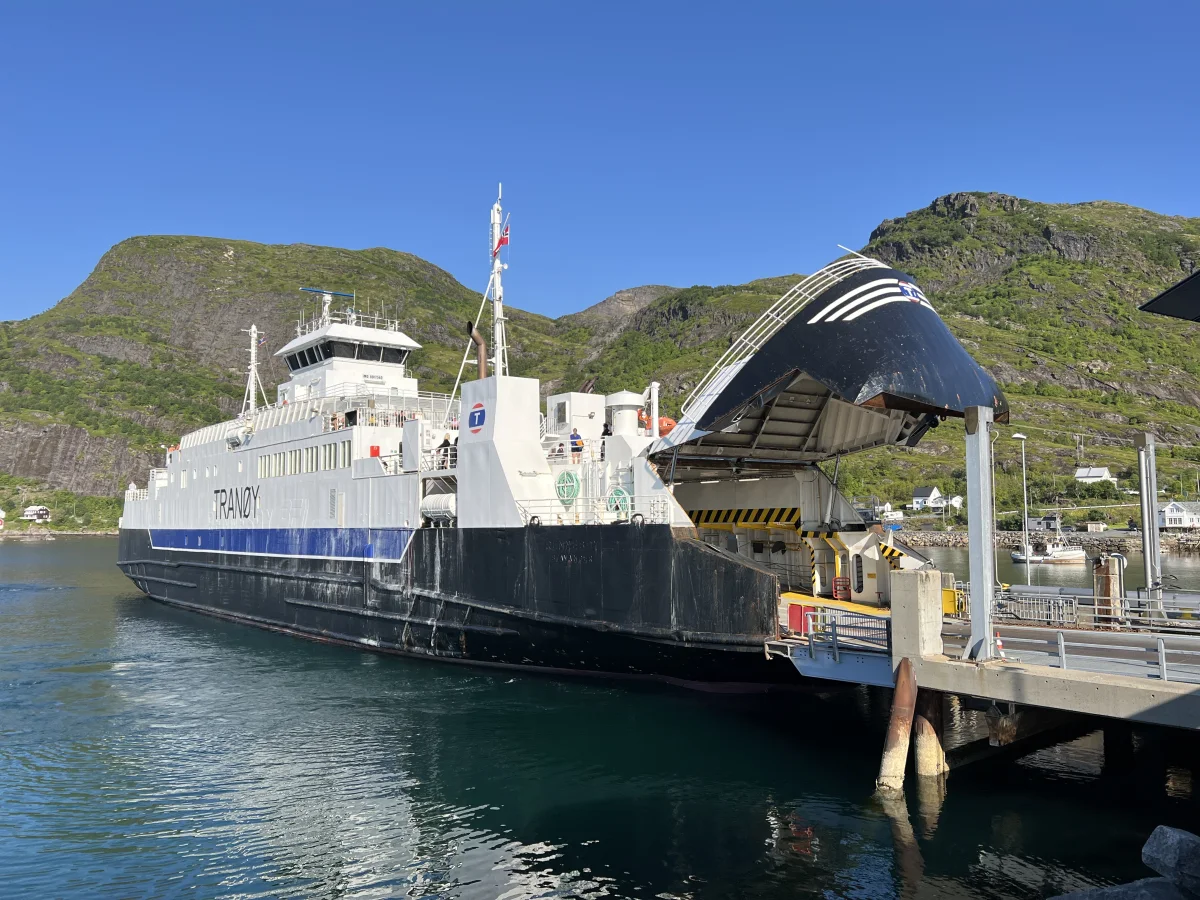
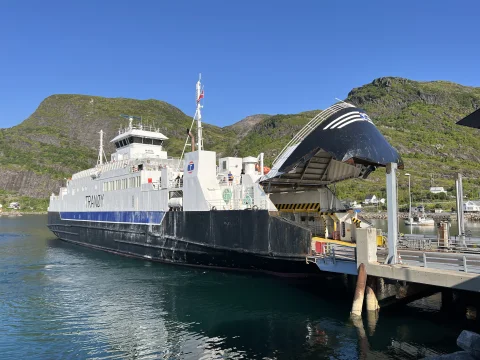
Bodø can be reached by air or train. The ferry to Moskenes gives access to western Lofoten, but you still need to get from the airport or station to the correct quay, and from Moskenes to your accommodation.
Use Torghatten’s current route page for the sailing you intend to take. Some itineraries serve other islands; compare the actual departure and arrival time. Vehicle travel and a place reservation involve different charges and conditions.
As a foot passenger, plan the onward bus or other transfer from Moskenes before choosing a departure. Do not assume that an accommodation labelled “Reine” is within an easy walk with luggage.
Avoid making the final possible sailing the only connection between an incoming flight and a prepaid stay. An overnight stop in Bodø can be a deliberate part of the plan when the timetable otherwise leaves too little margin.
The E10 provides the main road approach and spine through Lofoten. Check Statens vegvesen for current conditions and closures. Allow for stops and conditions instead of treating a map’s fastest driving time as a holiday schedule.
There is no railway into the Lofoten Islands themselves. Train travel requires an onward connection, for example through Bodø or Narvik. Search the complete route for your date and distinguish a passenger boat from a ferry that takes vehicles.
Without a car, choose accommodation and activities around workable connections. A central Svolvær stay can pair well with a boat trip from the harbour, while a remote cabin needs a more deliberate transfer plan.
Before you pay: check the weakest connection
Check the last bus, ferry or open rental desk in your itinerary. Then check luggage collection, transfer to the next departure point and the arrival instructions for your accommodation. A flight’s scheduled landing time is not the time you leave the airport.
Where separate tickets are involved, read each provider’s conditions for delays and changes. Keep a practical alternative in mind: a later connection, a nearby overnight stop or a different collection arrangement.
Save your tickets and booking details, then recheck operating updates on the day. The most useful itinerary is one that still works when a small delay occurs, rather than the fastest possible combination on paper.
Questions & answers
Which airport should I fly to for Lofoten?
Compare Svolvær for the east, Leknes for central Lofoten, Evenes with a road transfer, and Bodø with a ferry or onward flight. Your first and last nights should guide the choice.
Can I get to Lofoten by train?
Not directly. You can travel by train to a mainland gateway such as Bodø or Narvik, then continue by ferry, bus or car. Check the full dated itinerary.
Can I travel from Bodø to Lofoten without a car?
Yes, but plan the ferry or other transport connection and the transfer at the Lofoten end. Check the current timetable and the address of your accommodation before booking.
How much time should I leave between a flight and the ferry?
There is no single safe interval for every itinerary. Include baggage, the transfer to the quay, the operator’s check-in deadline and a margin for delay. Separate tickets and a final sailing need particular care.
Sources & editorial approach
Selected by ViewLofoten for location, practical differences and fit with the itinerary, using published information from the providers. Compare the exact room, vehicle or departure before booking. Prices, availability and conditions depend on your dates.
With your consent, Vercel measures page views and clicks. We do not send search terms, travel dates or contact details. Your choice does not affect the content. Privacy
 For a shorter ground transfer