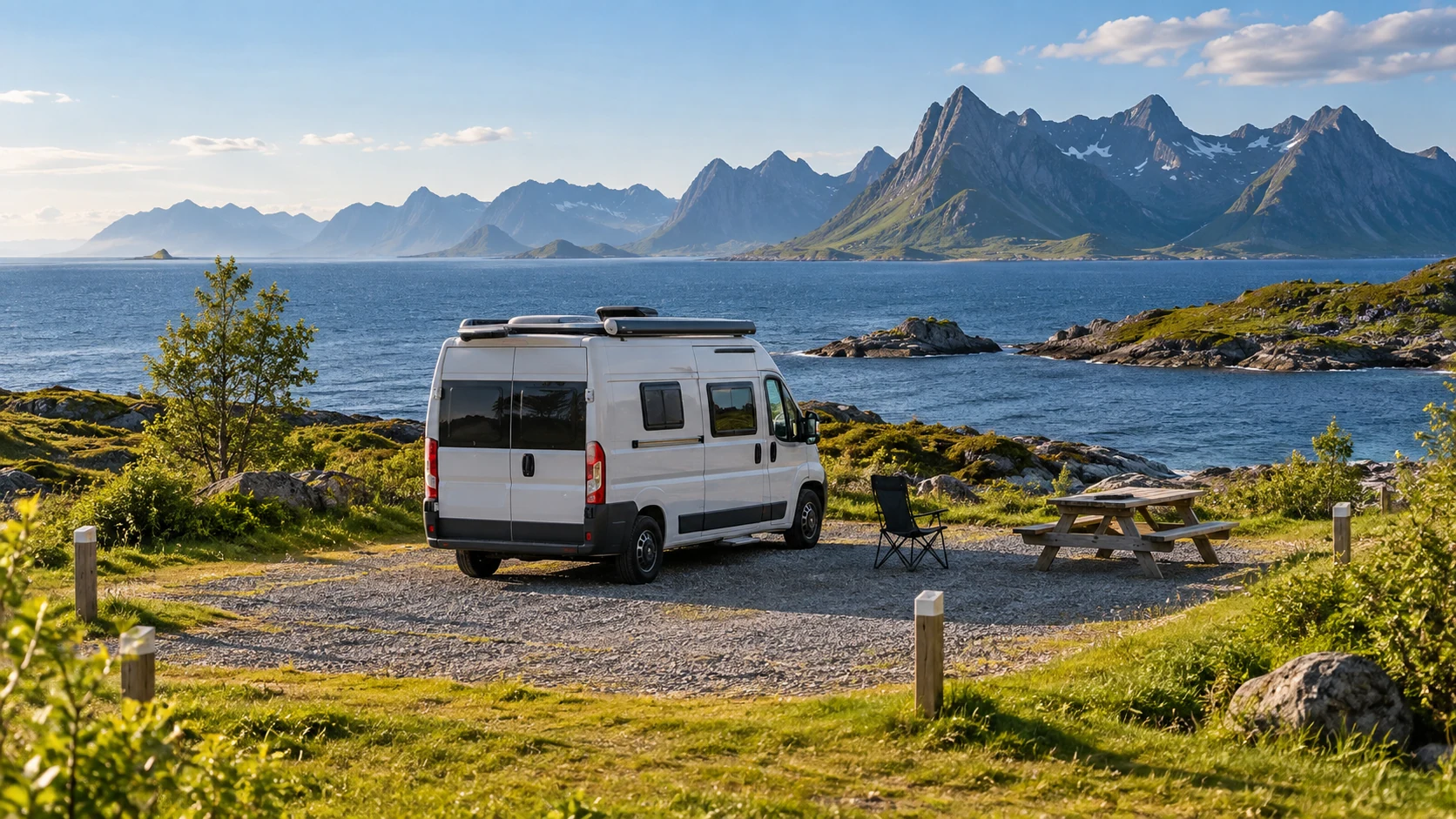
Camping on uncultivated land and sleeping in a vehicle are different situations
Norway’s right to roam allows access and camping on uncultivated land, subject to rules on distance, length of stay and consideration for others. It does not permit driving off the road, parking on cultivated land, using private driveways or ignoring local signs.
For motorhomes and caravans, parking must be legal and camping must not be prohibited. Other vehicles being parked there does not make the spot lawful. Local rules can change, and some areas have specific restrictions.
A designated pitch offers more than a view
Campsites can provide toilets, showers, water, electricity, waste disposal and local knowledge from the hosts. This also means less time spent looking for somewhere to stay in the evening.
Compare opening dates, advance booking, vehicle length limits, electrical hook-ups, waste disposal, kitchens, washing facilities and distances to activities. A site shown on a map may be closed or full.
Have an alternative in the same region. Driving from Reine to Svolvær after dark because the first choice is full is a poor backup plan.
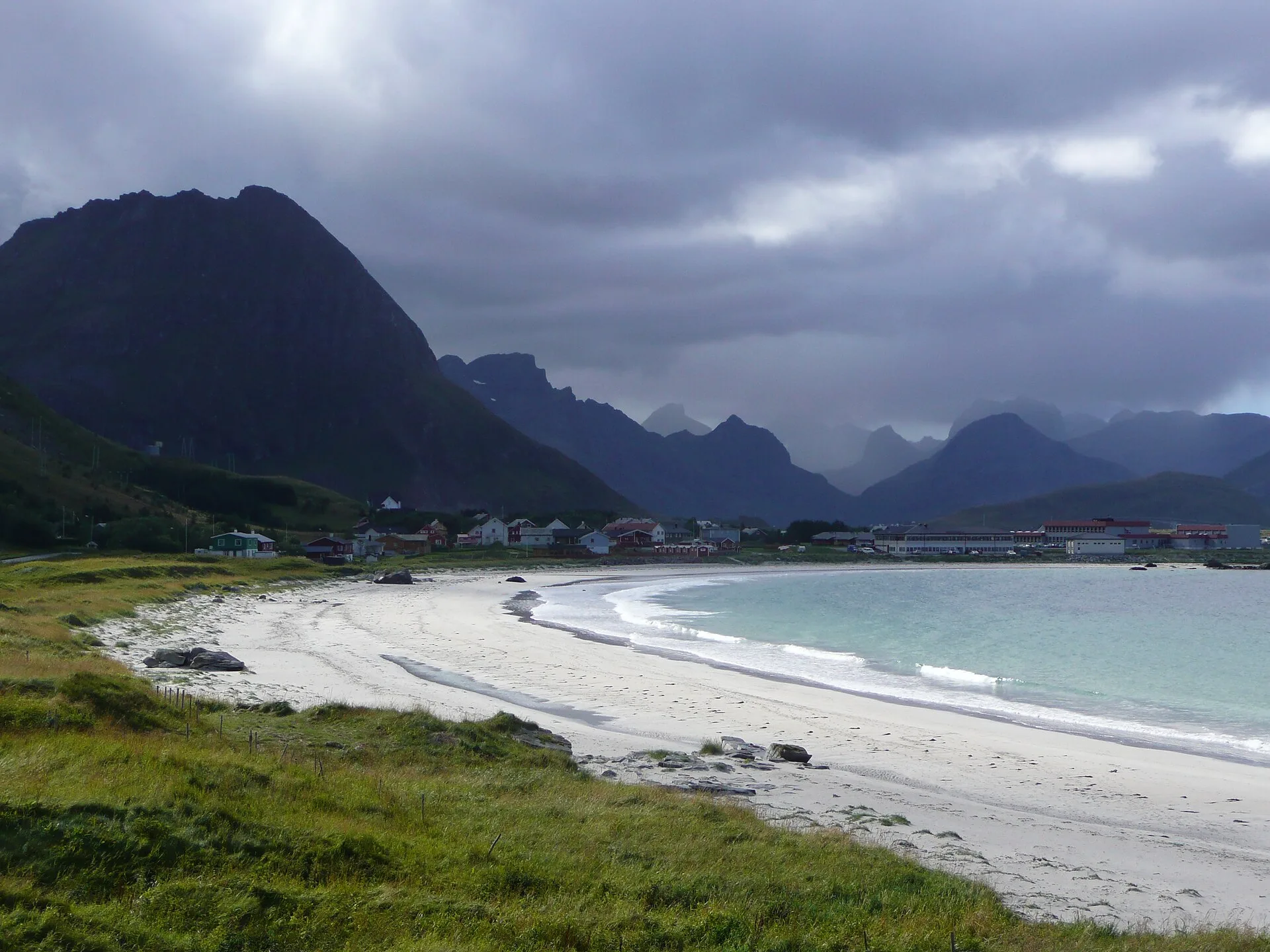
Plan for toilets, greywater and rubbish every day
Use approved disposal stations for toilet waste and wastewater. Never empty them into the countryside, unauthorised drains or the sea. Put rubbish in bins that still have room for it.
Visit Lofoten’s map shows service facilities, but check the details locally. Do not assume that a café or shop will handle your rubbish, provide water or let you use the toilets without asking or being a customer.
If you are camping in a tent, plan your toilet arrangements before leaving the road. Carry out wet wipes and other waste; do not leave them in the countryside.
Passing places and photo pull-offs are not overnight pitches
Narrow roads are shared by cyclists, buses, farm vehicles and people stopping for photographs. Keep passing places clear and do not obstruct sightlines, bends, driveways, waste collection or emergency access.
Large vehicles need extra margins in windy conditions and on bridges. Keep driving stages short, check Statens vegvesen’s traffic information and get familiar with your vehicle’s width before taking a busy side road.
Do not drive onto beaches, grass, bogs or other off-road ground to find a secluded pitch. Tyre tracks can remain for a long time and may encourage others to repeat the illegal driving.
Wind, cold and fire risk affect your choice of pitch
An exposed beach site may be unsuitable in strong winds even if it is legal. Tent pegs, awnings, loose furniture and roof loads must be secured or packed away. Check the weather and danger warnings before nightfall.
Follow national and local rules on open fires. Seasonal fire bans may be supplemented by stricter local restrictions. Use designated fire sites only when fires are permitted and conditions are safe. Barbecues and camping stoves also need safe clearance, stable ground and equipment to extinguish a fire.
At campsites, spacing between vehicles is part of fire safety. Do not squeeze extra vehicles into a roadside pull-off just to get a view.
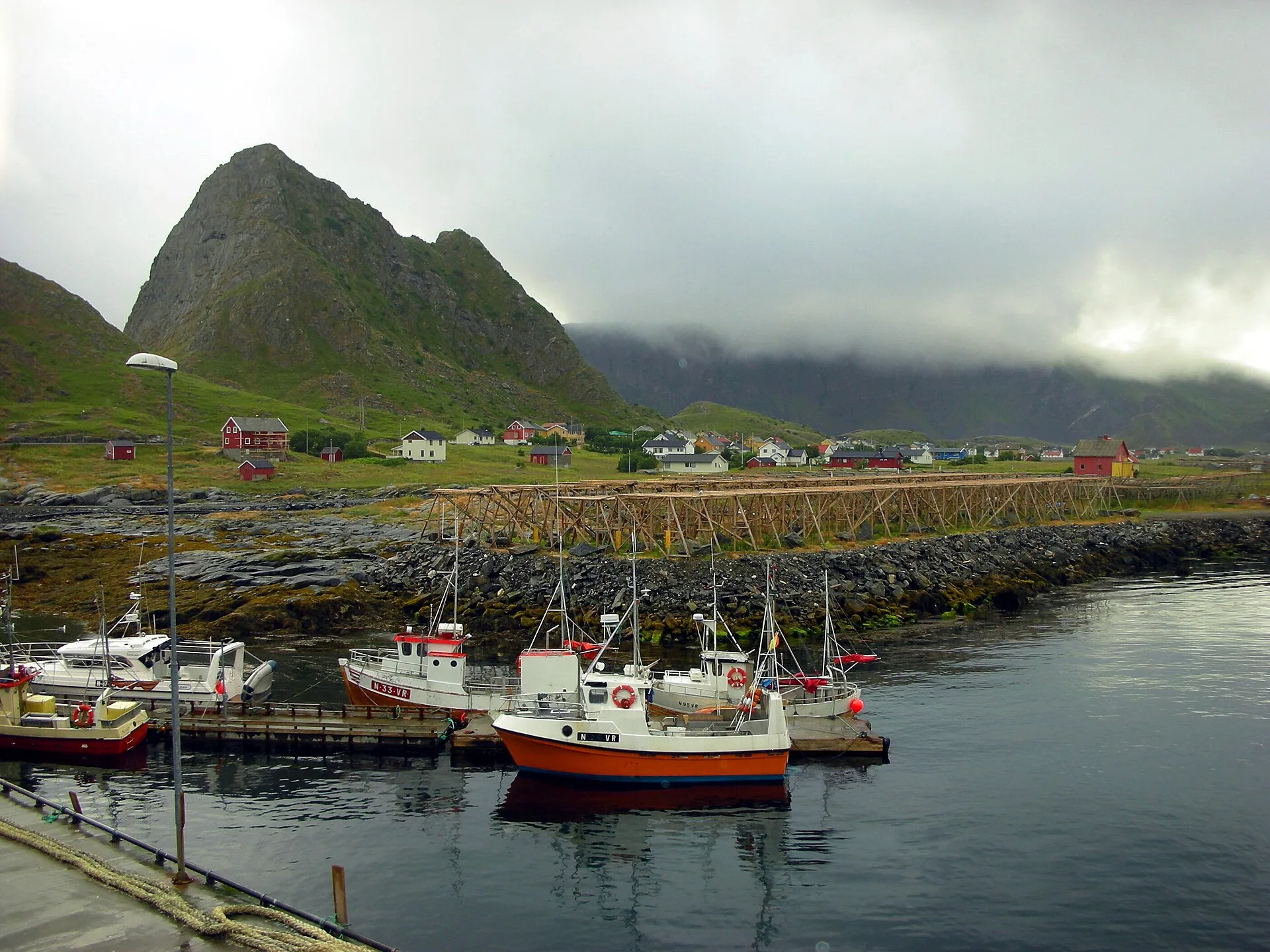
Plan your route by region, not around a nightly search for a pitch
Divide the trip into eastern, central and western Lofoten, with two or three nights in each region. Book busy dates and your first night ahead if you arrive late. Use days when you move between bases for groceries, wastewater disposal and a short activity.
On our map there are camping points for orientation, but a point is not a live confirmation of opening or free space. Use the official website or call the operator before driving.
A responsible trip supports local businesses, leaves no trace and makes sure the next visitor finds a well-kept place.