Access and practical advice
Four different beach days
Easy stop
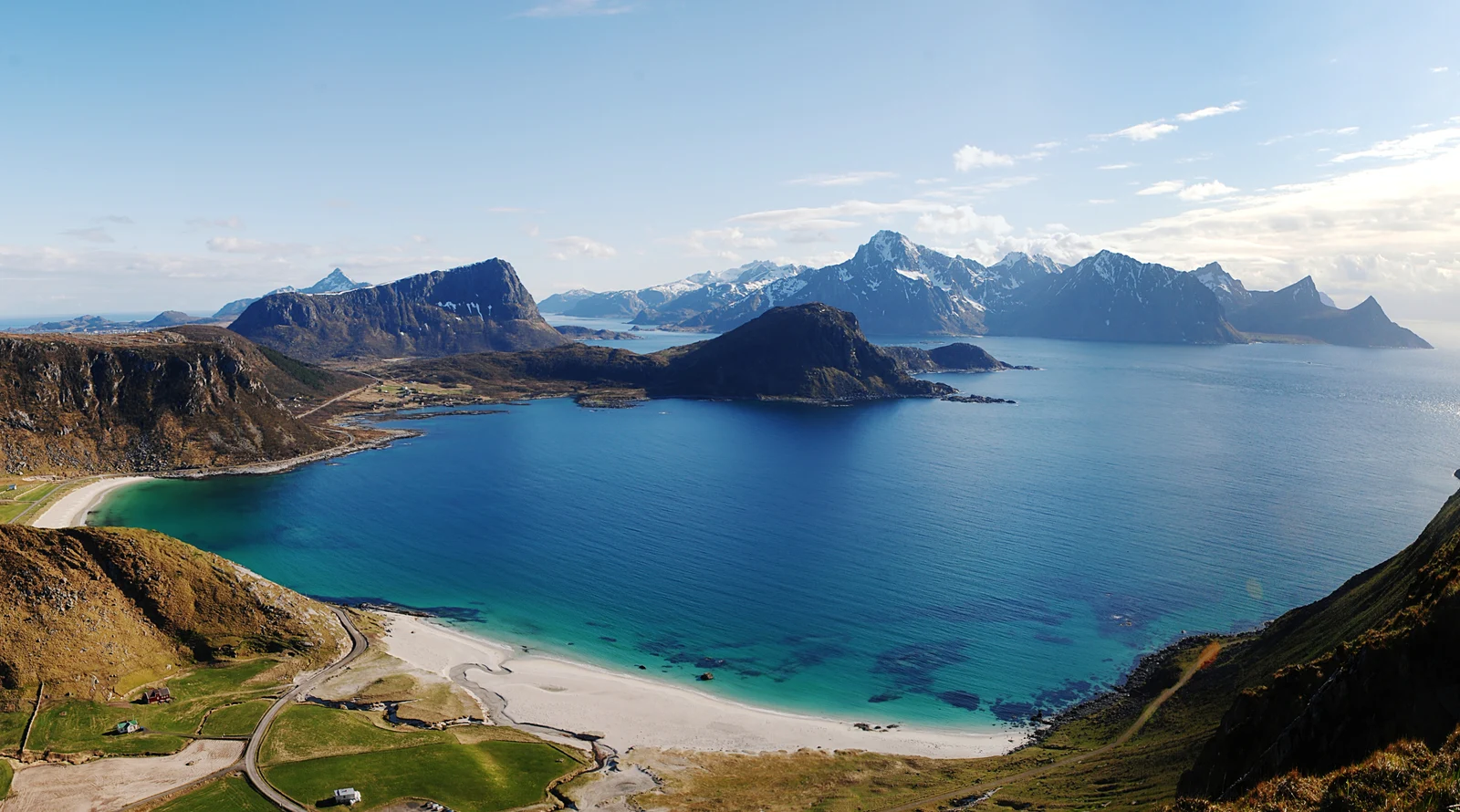
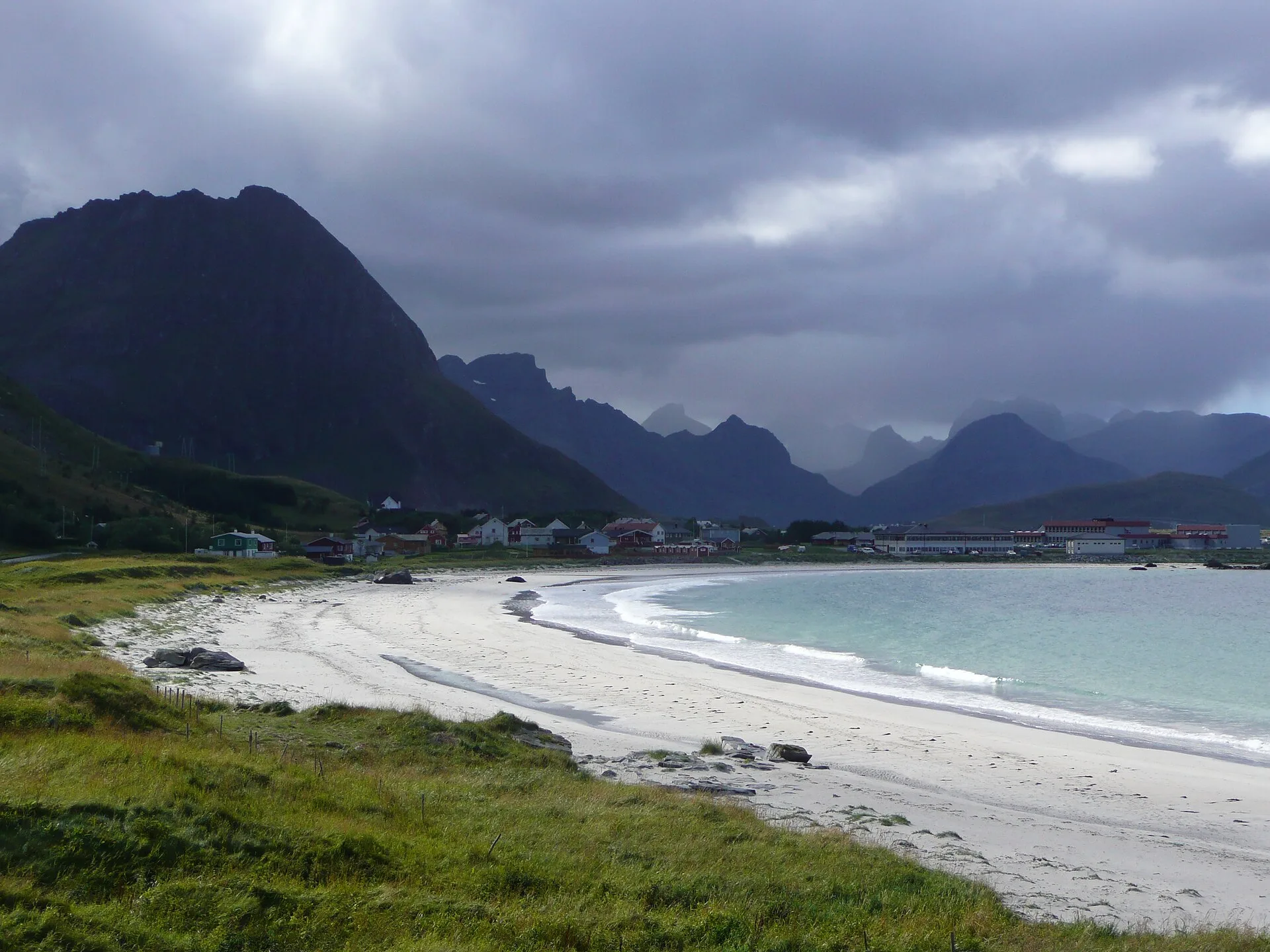
Choose a beach close to the road and facilities when time is short, the weather is uncertain or the traveling party needs an easy return. Haukland and Ramberg are well-known examples, but capacity and conditions still need to be checked.
Open coastal landscape
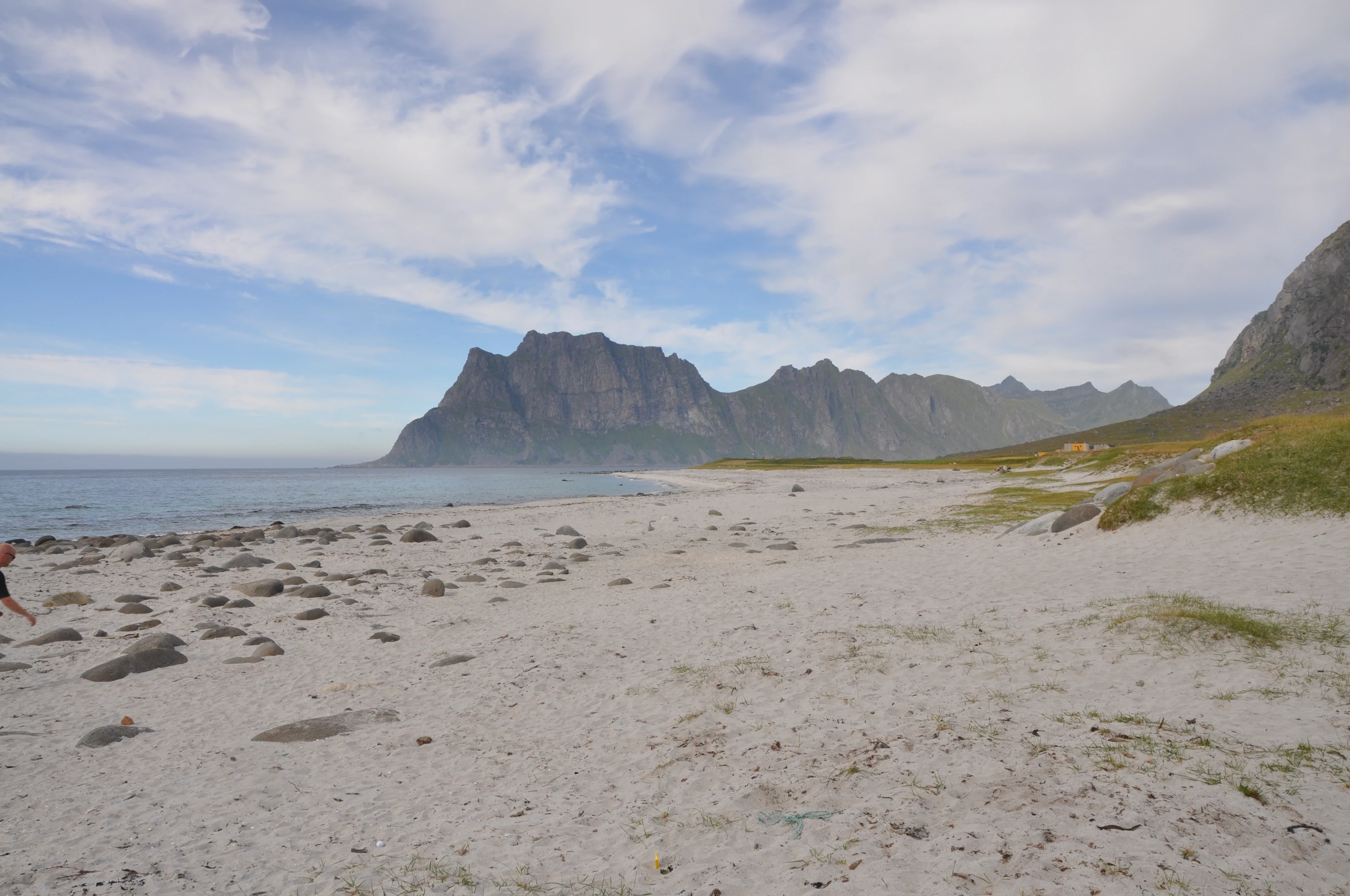
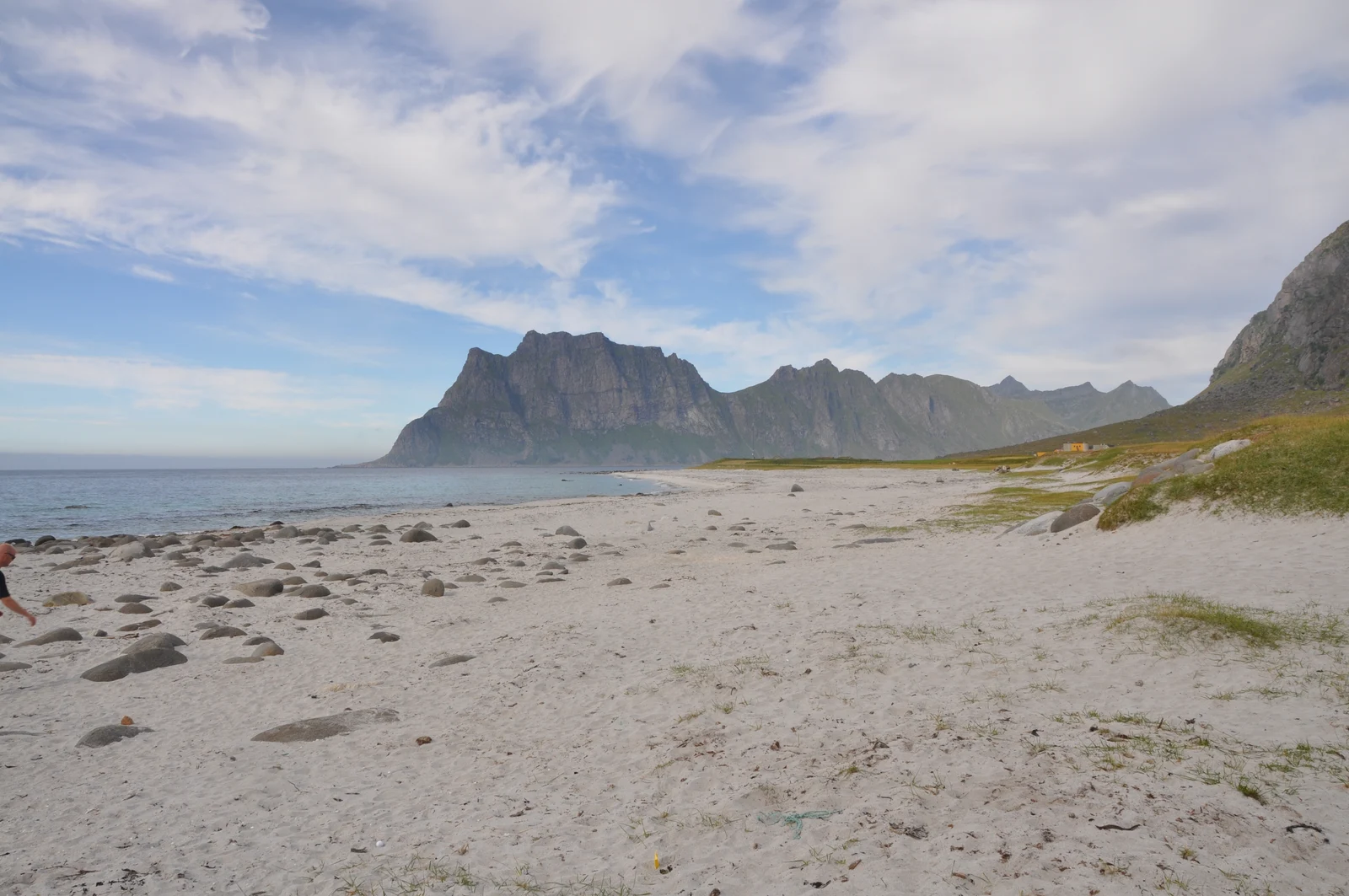
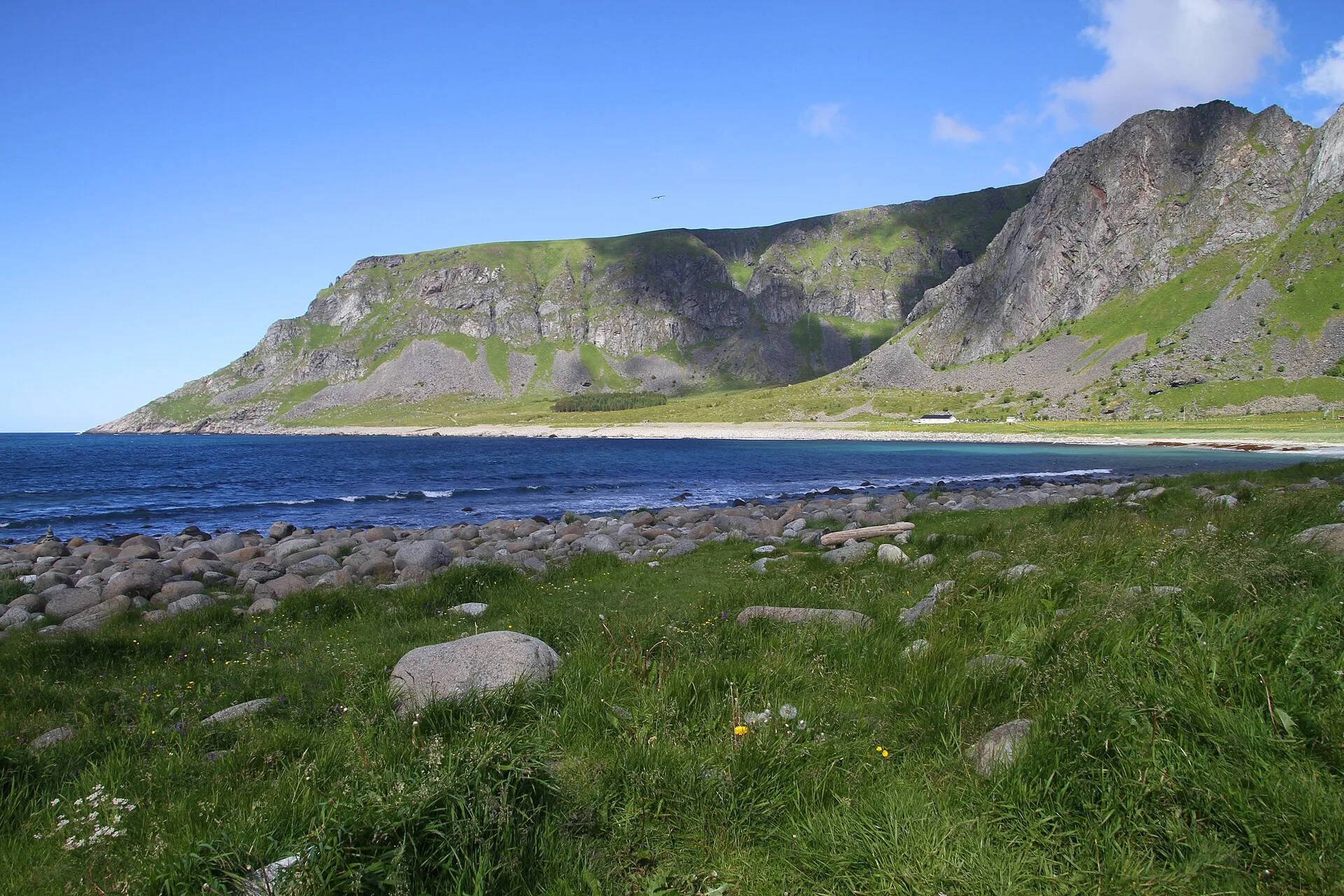
Uttakleiv and Flakstad provide strong contact with the sea and the weather. Exposure means that wind and sea can quickly make your stay cold or unsafe.
Surf
Unstad and Flakstad are associated with surfing. Use a local provider, the right equipment and assessment when you do not know the place.
A beach at the end of a walk
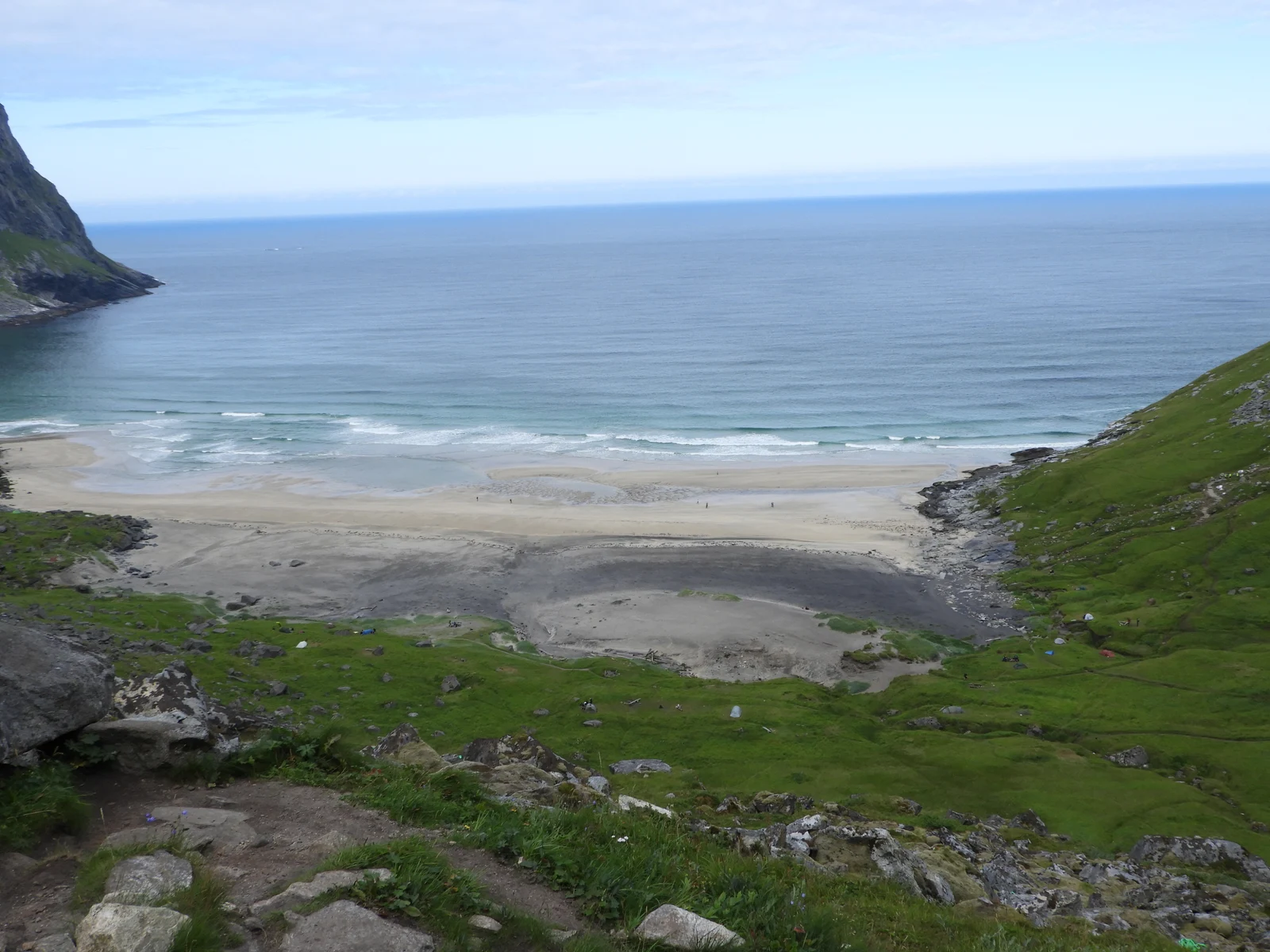
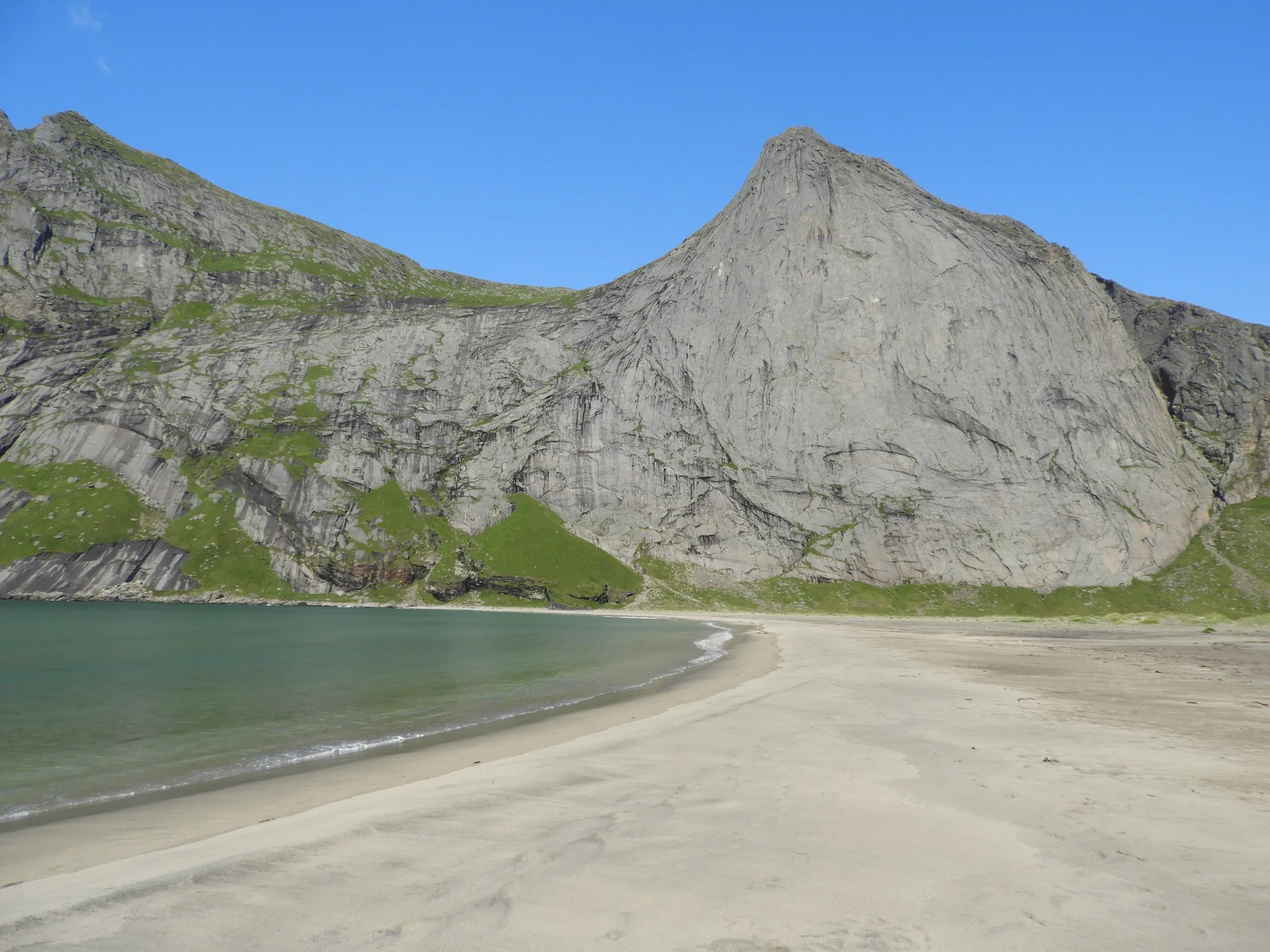
Kvalvika and Bunes are not quick roadside stops. Plan transport, the walk, trail conditions, daylight and the return as a dedicated outing.
Planning a beach stop on the way to Henningsvær? Read our Norwegian-language Rørvikstranda guide for maps, access and tent and motorhome rules.
Haukland, Uttakleiv and Unstad
Haukland is an accessible choice for views, short stays and a starting point for nearby hiking opportunities. The popularity means that you have to deal with parking, signage and other users. Uttakleiv is open to the sea and can provide dramatic light, but wind, waves and slippery rocks require distance and attention.
Unstad is a living rural community and surfing spot, not just a backdrop. Respect private property, local businesses, parking and traffic. Before surfing, skill, current, waves, temperature and equipment must be assessed with a qualified local operator.
Do not try to "collect" all three in a short time if the parking or weather is not suitable. One good time at the beach and a safe short trip is better than a lot of cars and quick photos.
Ramberg, Flakstad and the journey west
Rambergstranda is visible and easy to reach from the main road, but stops must still take place in an organized and legal place. It can work well together with a quiet day in Ramberg, Nusfjord or further west, depending on the season and opening hours.
Flakstadstranda is open and exposed to the weather, with surf and broad landscape motifs. Keep a good distance from the sea in case of large waves and check conditions through weather and wave information. Children must be closely supervised near the water.
On travel days west, the beach should be a flexible stop, not a time that causes you to miss a ferry, check-in or activity. Parking capacity can determine whether you drive on.
Kvalvika and Bunes require a tour plan
Kvalvika can be reached on foot and must be assessed based on the steepness of the trip, terrain, parking, weather and personal experience. It is not an easy option just because the destination is a beach. Wet terrain and heavy traffic can increase wear; follow the existing path and choose another day when conditions are poor.
Bunes requires sea transport to or from Vindstad in addition to walking. The timetable, capacity, attendance and last return must be checked for the date. Don't build your day on an old departure from a blog or a screenshot.
Bring warm clothes, food, water and a light appropriate to the season, and take all rubbish home. Before camping, check Norway's right-to-roam rules, local restrictions, toilet facilities and visitor pressure.
The sea determines more than the air temperature
Swells can reach further up than previous waves, and currents can be strong. Do not stand with your back to the sea on exposed rocks or let children play without an adult nearby. Cold water provides rapid cooling, even on hot summer days.
Consider wind direction and strength, precipitation, visibility and temperature from MET. Warnings and forecasts are decision support, not a substitute for on-site observation. If the sea looks rough, increase the distance.
Surfing, SUP, kayaking and swimming require activity-specific skills and equipment. Rent locally or use a guide when you do not know the beach, the current and the possibility of rescue.
Parking, toilet, camping and nature
Use designated car parks and toilets. Passing places, private roads, farmland and unmarked verges are not overflow parking. If the car park is full, choose another beach or return later.
Take all rubbish away, including food scraps and wet wipes. Use established paths and sand rather than making new tracks through vegetation. Respect homes, grazing animals and birds, and follow dog-leash rules.
Camping rules can vary, and high pressure makes organized campsites the best first choice. Check local signs and updated guidance.