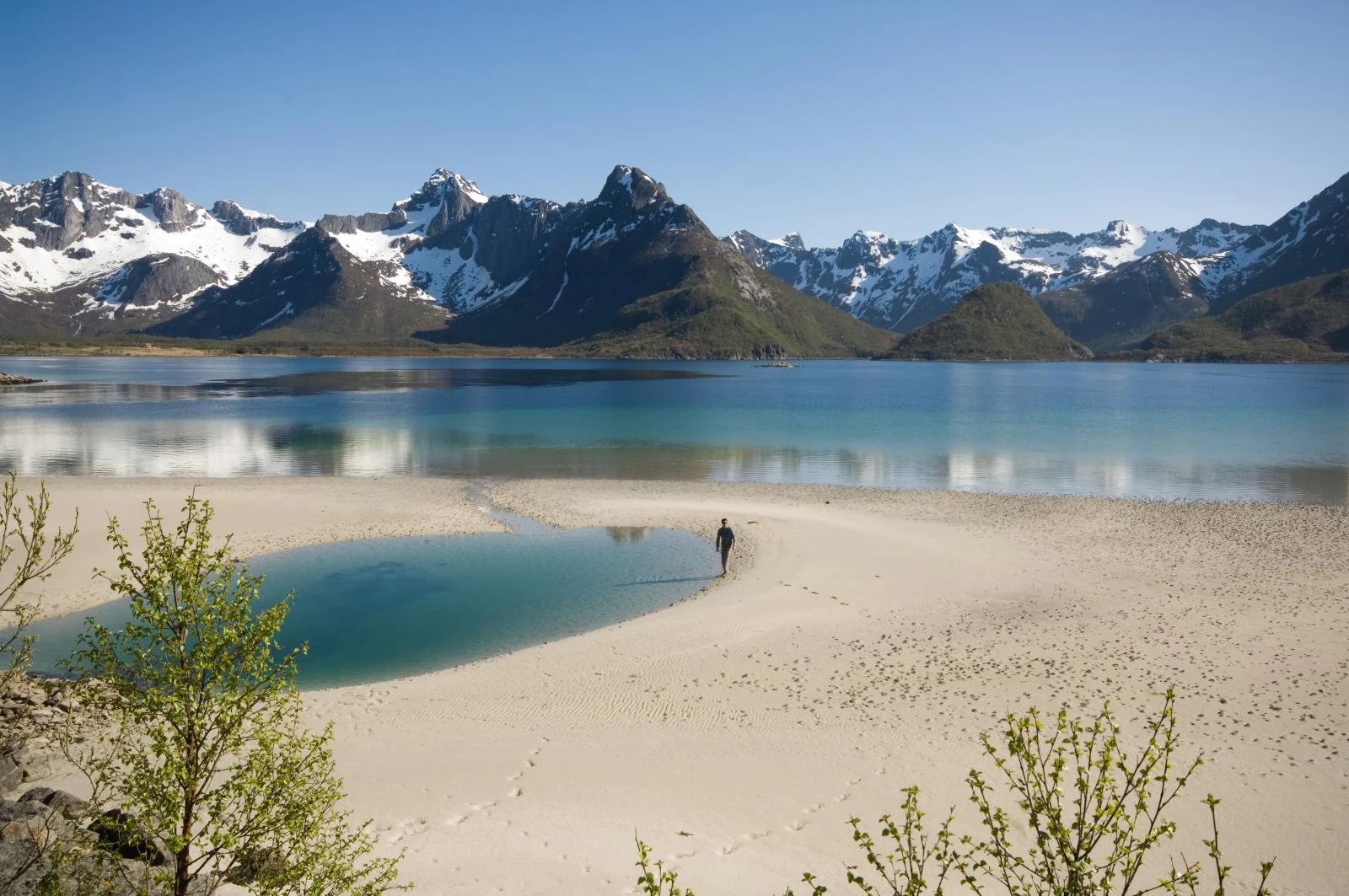
Two detours with different direction and function
Laukvik is on the outer north side of Austvågøy and can be included in the route between Fiskebøl, Laukvik and Svolvær. Digermulen lies towards Raftsundet in the south-east of the island and can be reached via a different road. Combining both on the same day makes for a lot of driving.
Choose Laukvik for the sea horizon, summer light, village life and cycling. Choose Digermulen for mountains, straits, views and an unhurried stay. Trollfjord is normally visited by boat with an operator; a viewpoint that looks nearby on a map is not the same as visiting the fjord.
Both have fewer services than Svolvær. Check food, fuel, EV charging and accommodation before taking the side trip.
Laukvik offers the outer coast and a clear light experience
Laukvik faces north-west and is associated with the midnight sun in summer and a dark horizon for northern lights when the sky is clear. Light phenomenon can never be guaranteed, and wind can make the coast challenging.
The place has local dining and visiting opportunities that vary with the season. Check Polarlightcenter and other businesses directly before driving. Use the harbor and the buildings with respect for work and privacy.
Staying overnight can be more rewarding than a late visit followed by a long drive back. Make time for sleep and check how you can darken the room during bright summer nights.
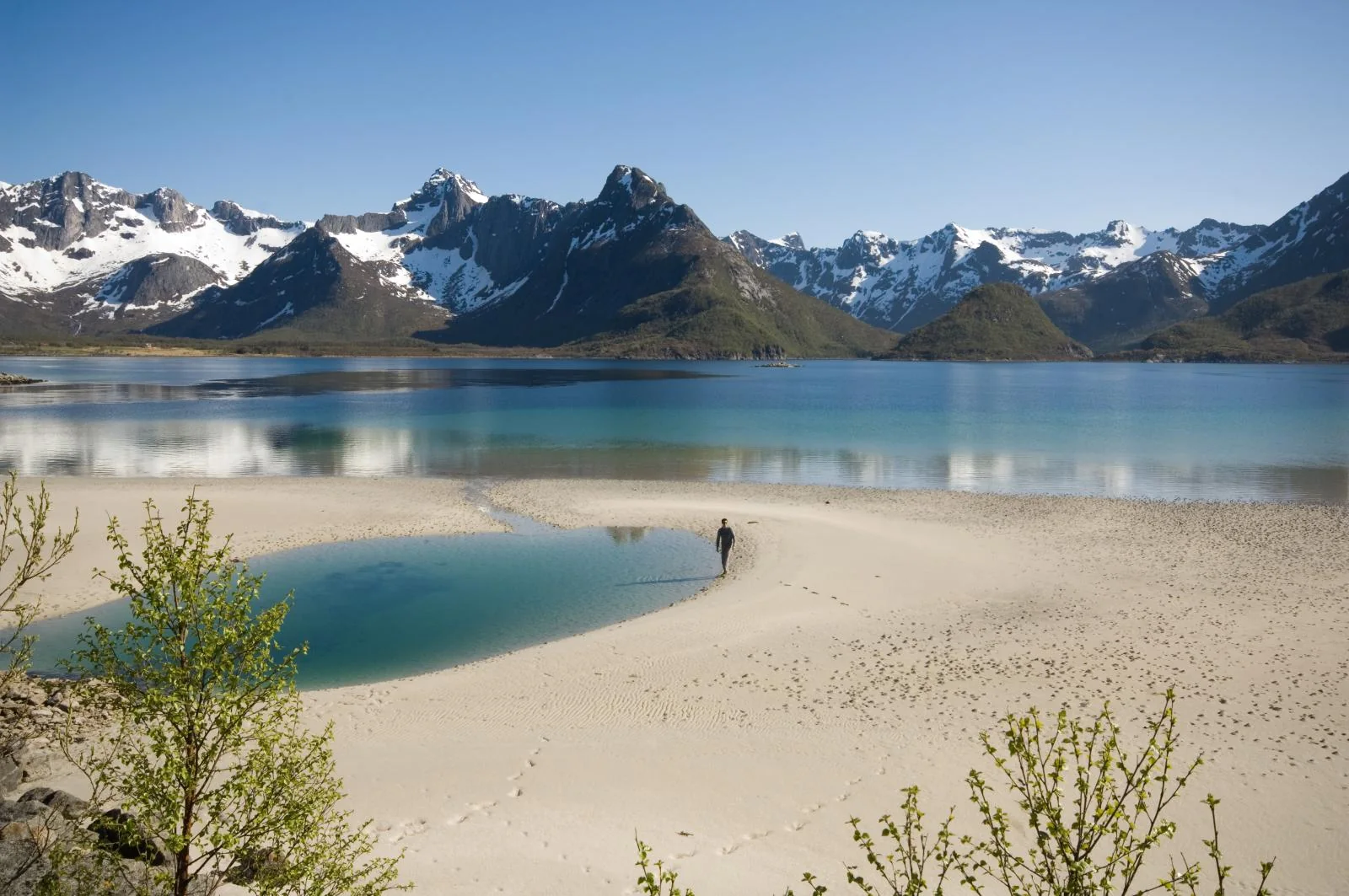
Digermulen is a mountain and strait base, not a shortcut
Digermulen is located by Raftsundet with a steep landscape and a quieter visitor rhythm. Current tours must be selected from an updated description and assessed against weather, visibility and experience. Mountains that look close from the village can have demanding terrain.
Sea activities and local guiding can provide a connection to Raftsundet and Trollfjorden, but the departure point must be explicit. Do not assume that all Trollfjord products start in Digermulen; many go from Svolvær.
Have food, clothing and a communication plan. Small offers and few departures make spontaneous changes more difficult.
The Midnight Sun Route is scenic, but its final section is demanding
Visit Lofoten describes the Fiskebøl–Laukvik–Vestpollen–Svolvær cycling route. The outer coast may have less traffic, but the final stretch to Svolvær follows the busier E10. Account for wind, tunnels, luggage and how fit and rested you feel that day.
Use bike lights and visible clothing even on bright summer nights. Plan food, water, repairs and any bus journey with your bicycle. Do not assume every departure accepts bikes without a reservation.
For families or inexperienced cyclists, a shorter ride on a quieter section may be better than the entire corridor.
Local buses exist, but infrequent services make a car easier
Visit Lofoten's transport overview shows local connections for Fiskebøl–Laukvik–Svolvær and Digermulen–Holandshamn–Storfjell, as well as a corridor towards Fiskebøl and Svolvær. Route number and frequency can be changed.
Search the entire trip in Reis Nordland and Entur. Find the last return and the walking distance from the stop to the accommodation. Taxis must be arranged in advance, and mobile phone coverage is not assumed everywhere.
Keep passing places clear and check the weather before exposed bridges and small roads. Carry enough fuel or battery charge for the return.
This is how you spend three days without crossing the island back and forth
Day 1: drive or cycle to Laukvik, explore locally and stay in the north. Day 2: enjoy the outer coast, a short walk or the changing light as conditions allow. Continue via Svolvær or your chosen route. Day 3: give Digermulen and Raftsundet their own day or overnight stay.
On a short first journey, you should choose only one of the detours. They cater mostly to travelers who have already seen the main axis or who want peace rather than a list of highlights.