Build the budget in five layers
- Getting there and back: flights, trains, ferries, baggage, overnight stops and transfers.
- Transport in Lofoten: rental car, fuel, charging, bus, boat, taxi and parking.
- Accommodation: room price, cleaning, breakfast, kitchen and cancellation.
- Days on site: food, activities, museums and small shopping.
- Contingency reserve: changes to the journey, an extra night or an alternative activity.
Enter all offers with the same number of people, nights and luggage. A cheap plane ticket to a more distant arrival point can become more expensive when further transport and a hotel night are added. A more expensive rorbu with a kitchen can result in lower food costs than a room without cooking facilities.
Distinguish between expenses that must be paid now, amounts that can be reimbursed and money that is only reserved as a safety margin.
Compare accommodation with equivalent inclusions
Look at the total price for the entire stay, not just the price per night. Check whether taxes, cleaning, bed linen, breakfast and parking are included. In cabins and apartments, you must also consider the number of actual beds, bathrooms, kitchen equipment and whether final cleaning is included.
The location has economic value. A central hotel can reduce the need for taxis and rental cars, while an affordable address far from stops or activities can create new costs. With a car, parking and charging must be considered. Without a car, walking distance must be measured on a realistic route, not a straight line.
Cancellation terms are part of the product. Compare a refundable price with another refundable price and read the deadline in local time.
The transport budget hides most side costs
For a rental car, budget for an additional driver, child seat, one-way fees, insurance, fuel or charging, tolls, ferries and parking. Choose the car to suit your luggage and the season; a larger vehicle is not automatically cheaper or easier on narrow roads.
For public transport, count all individual tickets, any travel passes, journeys to and from terminals and taxis where scheduled services do not reach your activity. A guided tour with transport may replace a rental-car day and several separate stops, but only if its itinerary matches what you want to do.
Compare up-to-date routes in Entur and Reis Nordland. Don't set a fixed amount in your budget based on an old article; route offers and prices are subject to change.
Food budget without missing out on food culture
Choose which meals should be experiences, and make the rest easy. Breakfast included in the room can be valuable on early activity days. A kitchen or fridge makes it easier to prepare breakfast, packed lunches and some dinners, but check what is actually there.
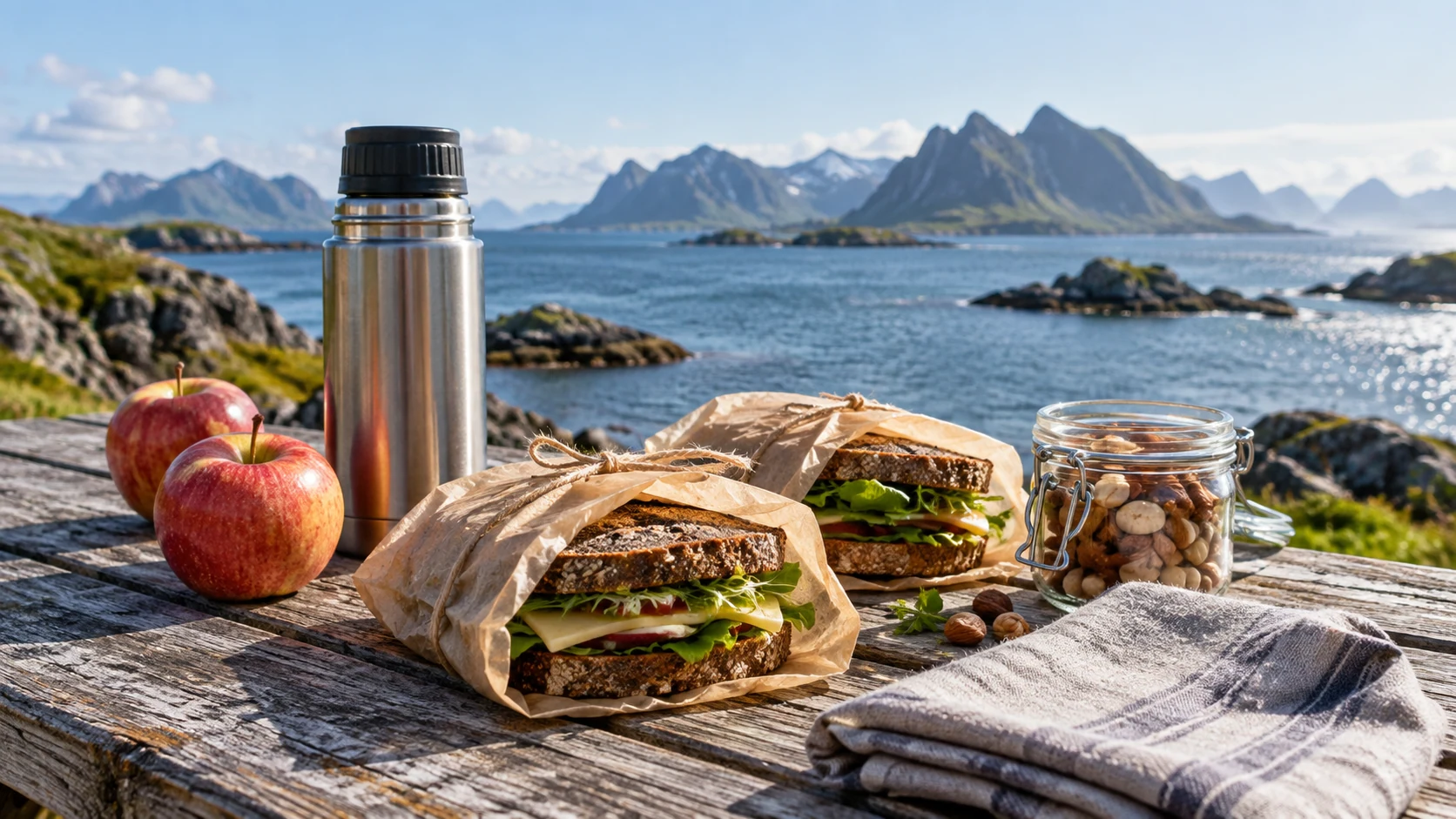
Stock up on groceries in a town before continuing to a smaller fishing village. Keep a backup meal in case a restaurant is closed or full. A packed lunch saves money and makes the day easier when distances and opening hours do not fit your plans.
Allow room in the budget for one or more local meals you really want to try. Use the restaurant directory to choose a place and occasion, then check the restaurant’s own menu and prices before visiting.
Spend on experiences you cannot recreate on your own
Prioritise a guide when they provide safety, a boat, specialist equipment, local knowledge or access you cannot arrange yourself. One expensive boat trip may be more memorable than several small paid stops. A gentle village walk, a beach or a prepared walking route can fill the rest of the day without an admission ticket.
Check what is included: transport, clothing, food, photo, equipment and cancellation. Compare products with the same duration and meeting place. A lower product price can be more expensive if you need a taxi to the start.
Add weather-sensitive main activities early in your stay. Flexibility can allow for rebooking and reduce the risk of the entire experience budget going to something that is cancelled.
Cut avoidable costs, not safety
- Stay more nights in the same base and reduce moving.
- Choose less busy dates when the season still suits your plans.
- Book with a kitchen if you actually want to use it.
- Choose one signature experience and several free nearby activities.
- Share a car and accommodation when the space, responsibilities and comfort suit your group.
- Keep a reserve for an extra night or changed transport.
Do not save by skipping essential winter clothing, necessary insurance or legal camping arrangements, or by pushing on with an unsafe mountain hike because it is free. A plan without a safety margin can be the most expensive choice.